


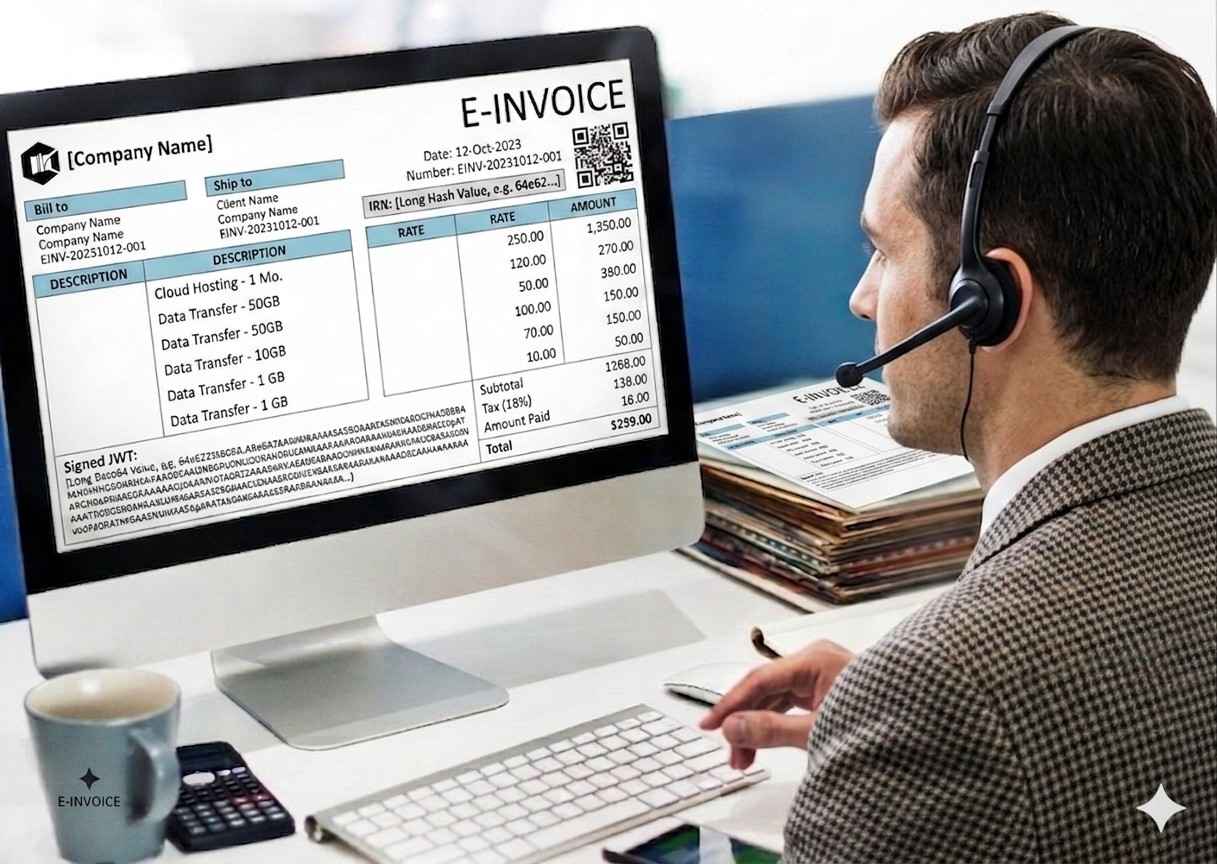
Here is something worth saying plainly: finding the right Singapore E-Invoicing Provider is one of those decisions that looks administrative on the surface but quietly shapes how your entire finance operation performs. Miss it, and you are dealing with delayed payments, compliance gaps, and manual processes that drain your team. Get it right, and InvoiceNow Singapore handles the heavy lifting — invoices flow, records stay clean, and your team is freed up for work that actually requires their attention.
The Peppol Singapore network, FreshBooks cloud invoicing, Singapore ERP E-Invoicing capabilities — these are not buzzwords. They are the infrastructure that determines how fast you get paid and how well you hold up during a GST audit. Businesses that have already partnered with a Singapore E-Invoicing Provider know this first-hand. This article covers what you actually need to know, without the fluff.
What E-Invoicing in Singapore Actually Is
Most businesses think they are already e-invoicing. They are not — at least not in the way IMDA defines it.
Emailing a PDF is not e-invoicing. It is a digital version of a paper process, with all the same risks: someone types figures incorrectly on the receiving end, a field gets missed, a payment gets delayed because the format did not match what the buyer’s system expected. True e-invoicing is structured data travelling directly between two business systems — machine-readable, automatically processed, and accurate by design. IMDA chose the internationally recognised Peppol standard for Singapore’s framework because it works cleanly across borders, not just locally. For your accounts team, that means less reconciliation time, fewer errors to chase down, and records that actually hold up when IRAS comes knocking. A dependable Singapore E-Invoicing Provider is what makes that transition happen without disrupting your existing operations.
InvoiceNow Singapore — The Mechanics
InvoiceNow Singapore is the national e-invoicing network, built on Peppol Singapore infrastructure and driven by IMDA. Choosing the right Singapore E-Invoicing Provider is what connects your business to this network effectively. Here is how it works day to day.
Your system generates an invoice. That invoice gets formatted into a Peppol-compliant structure and sent through your access point provider — your Singapore E-Invoicing Provider — directly into your customer’s system. Both sides do not need the same software. They just need to be on the network. Large organisations running Singapore ERP E-Invoicing through platforms like Apprel21 ERP get this built in. Smaller teams using FreshBooks cloud invoicing get the same network access without the enterprise overhead. Either way, the invoice arrives in minutes, correctly formatted, ready to process — no follow-up emails needed.
Peppol Singapore and Why Cross-Border Matters
Peppol — Pan-European Public Procurement Online — originated in Europe but Singapore adopted it for good reason. It is genuinely interoperable. Being on Peppol Singapore means your business can send and receive e-invoices with trading partners in Australia, New Zealand, and across much of Europe on the same infrastructure used for local transactions. Your Singapore E-Invoicing Provider is the accredited Peppol Access Point, making that happen — formatting invoices correctly, transmitting them securely, and ensuring delivery without manual intervention. Pair that with Affinity CRM Integration Services SINGAPORE, and the customer data feeding those invoices stays clean from the outset. Fewer errors, better reconciliation, less back-and-forth between departments.
What Singapore Businesses Actually Gain
Skip the theory — here is what the shift to e-invoicing looks like in practice:
- Shorter payment cycles — invoices that arrive correctly formatted get approved and paid faster. It is not complicated; it just works.
- Far fewer processing errors — take manual re-entry out of the equation, and a whole category of mistakes disappears with it.
- Lower overhead — printing costs, postage, physical filing, and manual processing time are expenses that simply stop recurring.
- Compliance that does not need babysitting — a qualified Singapore E-Invoicing Provider keeps your invoice templates aligned with IMDA and GST requirements automatically.
- Cleaner audit trails — structured invoice data retrieves easily and presents well during IRAS reviews, no scrambling required.
- Joined-up operations — Apprel21 ERP and Affinity CRM Integration Services SINGAPORE connect invoicing to your broader workflows, so the same data does not get entered twice across different systems.
There is also a reputational dimension worth noting. Government agencies and large private sector buyers are increasingly looking for suppliers who are already InvoiceNow Singapore ready. Being able to say yes to that question without hesitation carries more weight than most businesses realise. That kind of readiness starts with selecting the right Singapore E-Invoicing Provider early.
How to Implement E-Invoicing — Step by Step
Implementation is not as complicated as it sounds. Most businesses complete the process in a matter of weeks:
- Check what your current system already supports — many accounting and ERP platforms have InvoiceNow Singapore integration available as a standard feature. Start there.
- Pick an IMDA-registered provider — your Singapore E-Invoicing Provider must hold accredited access point status. Verify this upfront.
- Register your Peppol ID — every business on the network has a unique identifier. Your provider manages this registration.
- Connect your business tools — whether through Singapore ERP E-Invoicing on Apprel21 ERP or FreshBooks cloud invoicing, integration is handled by your provider.
- Run test transactions — send and receive test invoices before going live. Confirm the formatting and delivery work as expected.
- Brief your finance team — the workflow changes are not dramatic, but your accounts staff need to know how to handle edge cases and exceptions.
Businesses already using Affinity CRM Integration Services SINGAPORE tend to find the transition cleaner than average — accurate customer data from day one removes a common source of invoicing errors before they even start. Your Singapore E-Invoicing Provider should guide you through each of these steps with dedicated onboarding support.
Compliance in Singapore — Where Things Stand
The regulatory picture is unambiguous and moving in one direction. If you have not yet engaged a Singapore E-Invoicing Provider, the timeline for doing so is shortening.
All Singapore government agencies are already mandated to receive Peppol e-invoices. That means any business supplying to the public sector needs to be InvoiceNow Singapore-ready — no workaround, no exceptions. The private sector rollout is picking up pace too, with major organisations across finance, logistics, and retail progressively requiring their supplier networks to transact digitally. On the GST side, e-invoices transmitted through the Peppol network carry the same legal standing as paper invoices, provided they include all IRAS-required fields: GST registration number, invoice date, item description, and total payable amount. A competent Singapore E-Invoicing Provider builds all of that into your templates from setup. Enterprise Singapore’s digital transformation grants also remain available to eligible businesses — meaning the cost of acting now is lower than most assume, and the cost of delaying is higher than it looks.
Conclusion
E-invoicing in Singapore is not heading somewhere — it is already here, and the businesses treating it as a priority are the ones pulling ahead.
The fundamentals are straightforward: connect with an accredited Singapore E-Invoicing Provider, integrate properly with your existing systems — whether that is Singapore ERP E-Invoicing through Apprel21 ERP, FreshBooks cloud invoicing for leaner operations, or tighter data flow through Affinity CRM Integration Services SINGAPORE — and let the infrastructure do what it was designed to do. The competitive edge does not belong to the biggest businesses. It belongs to the ones that moved with intention and set things up correctly from the start.
FAQs
Q1. What does a Singapore E-Invoicing Provider do?
Connects your business to Peppol, enabling IMDA-compliant electronic invoice exchange with buyers and suppliers.
Q2. Is InvoiceNow Singapore mandatory for all businesses?
Mandatory for government suppliers; private sector adoption is strongly encouraged and progressively expanding.
Q3. Can I use FreshBooks cloud invoicing with InvoiceNow?
Yes — FreshBooks supports integrations that connect directly to the InvoiceNow Singapore network.
Q4. How does Singapore ERP E-Invoicing work?
Your ERP links to Peppol via an accredited access point, fully automating invoice dispatch and receipt.
Q5. What role does Affinity CRM Integration Services SINGAPORE play?
Keeps customer data accurate between your CRM and invoicing system, reducing billing errors significantly.
Q6. Is Apprel21 ERP compatible with InvoiceNow?
Yes — Apprel21 ERP supports InvoiceNow Singapore, combining enterprise resource planning with compliant e-invoicing.
Q7. How long does e-invoicing implementation typically take?
Most businesses go live within a few weeks, depending on system complexity and integration requirements.
Source by:
Image by Gemini