

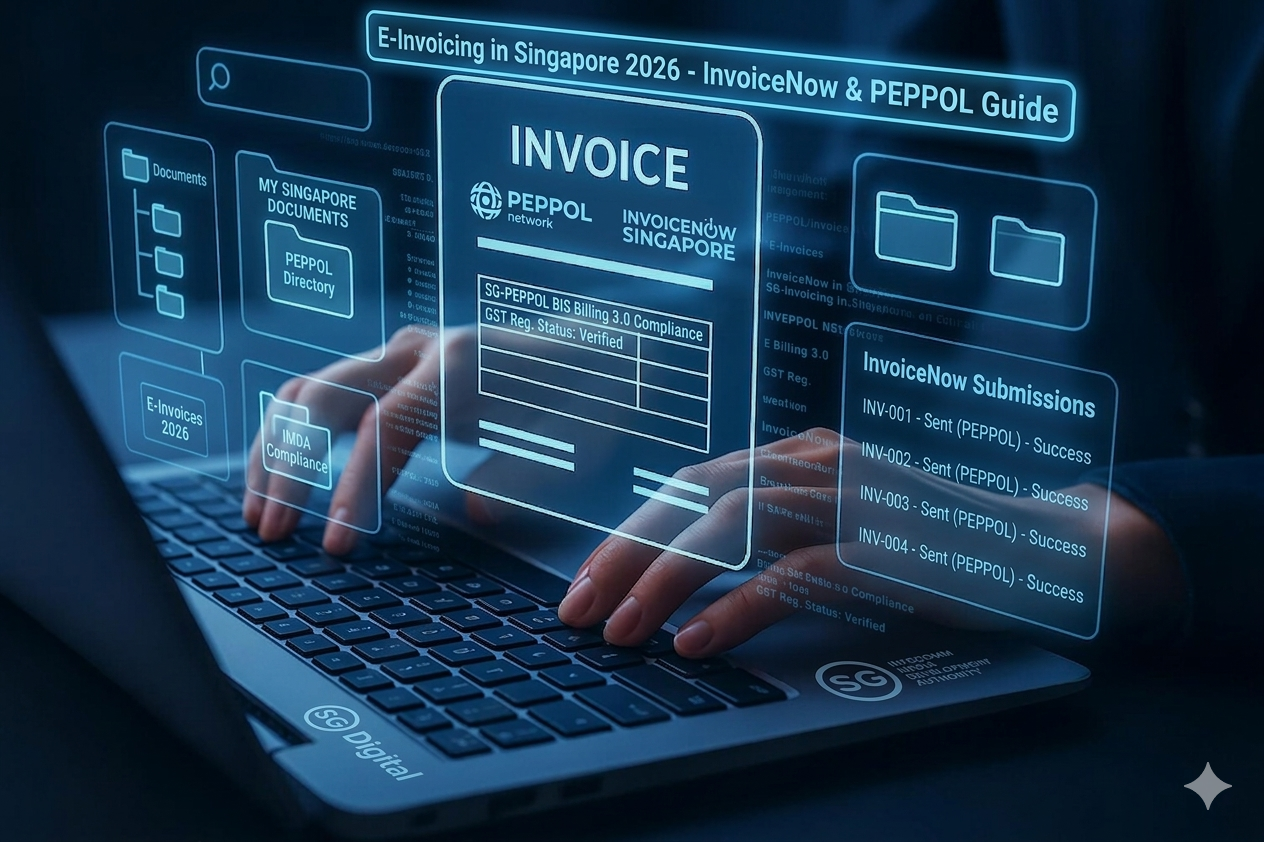
Singapore is moving forward in creating a digital tax system with enhanced regulations in electronic invoicing for businesses. One of the most significant electronic invoicing regulations in Singapore is the upcoming April 2026 InvoiceNow Mandate, which is to be implemented for GST businesses that are required to prepare for a digital invoicing system in Singapore.
The main idea behind this initiative is to enhance tax reporting, increase transparency, and encourage businesses to implement a digital invoicing system in Singapore by removing traditional invoicing methods. InvoiceNow is a digital invoicing system that enables businesses to send electronic invoices in a structured format between accounting systems.
The upcoming April 2026 InvoiceNow Mandate is knocking on our door, and businesses are advised to prepare in advance to avoid any last-minute problems. Here’s a guide to help you understand who is impacted, what mistakes to avoid, and how to prepare for the upcoming situations.
Understanding the 1 April 2026 Deadline: Who is Affected?
This will primarily affect GST-registered companies operating in Singapore and require digital invoicing standards that are compliant with the InvoiceNow initiative.
Under the GST InvoiceNow Mandate April 2026, companies may be required to send their invoices through the InvoiceNow network for GST reporting and validation. This is part of the digital transformation process for tax authorities in Singapore.
This is also related to IRAS Mandatory E-Invoicing Singapore, whereby companies are encouraged to use standardized digital invoices for ease of processing.
Companies that are most likely to be affected by the GST InvoiceNow Mandate April 2026 are:
- Companies that are GST registered and use digital accounting systems
- Companies that are undergoing GST registration from April 2026 and onward
- Companies already connected to the InvoiceNow network
- Companies already participating in digital GST reporting initiatives
The government’s intention is to ensure that companies are able to transition into the digital invoice ecosystem prior to the InvoiceNow Mandate April 2026 coming into operation.
Common Mistakes to Avoid by April 1st
As the April 2026 InvoiceNow Mandate is nearing, businesses may face challenges in case of delays in preparations and misunderstandings of the guidelines.
The following are some of the common mistakes that businesses should avoid before the GST InvoiceNow Mandate April 2026 is rolled out:
1. Waiting Until the Last Minute
Businesses are likely to think that they can easily comply with the InvoiceNow Mandate by April 2026 by preparing in a matter of days. This is not true since there are processes to be followed before a business is ready to comply with the regulations.
Waiting until the last minute to comply may cause businesses to delay in their operations.
2. Ignoring System Compatibility
Not all accounting software is compatible with InvoiceNow. Businesses are therefore advised to check whether their accounting software is compatible with InvoiceNow.
3. Overlooking Data Standardization
InvoiceNow follows standardized invoice structures. Companies must ensure their invoice data, taxes, and customer information are standardized.
Incorrect data structures may hinder the transmission of invoices under the April 2026 InvoiceNow Mandate.
4. Choosing the Wrong Technology Partner
The selection of the right integration partner is critical for the successful implementation of the transition. Some integration partners may have low integration capabilities, which may not be able to accommodate future tax requirements.
Working with a certified integration partner helps companies comply with IRAS Mandatory E-Invoicing Singapore requirements.
3 Simple Steps to Get InvoiceNow Ready
Businesses can comply and get ready for its implementation by following three simple steps.
Step 1: Evaluate Your Current Invoicing System
Firstly, companies have to evaluate their current invoicing system. They have to check if they are using manual invoicing systems or accounting and ERP systems.
They also have to check if their current system is compatible with the April 2026 InvoiceNow Mandate.
Step 2: Connect to the InvoiceNow Network
To comply with the April 2026 InvoiceNow Mandate, companies have to connect to the invoice network using a certified access provider.
This will allow companies to send and receive invoices between systems without human intervention.
Step 3: Test and Validate the Integration
Before the implementation, businesses have to test and validate invoice submission and validation.
This will ensure that companies can send and validate invoices using the invoice network.
Businesses that are using digital invoicing solutions well in advance of the e-Invoicing mandate can benefit from the InvoiceNow Grant Singapore 2026.
Certified InvoiceNow Solutions for Singapore Businesses
- Singapore businesses have access to a wide range of InvoiceNow-compatible solutions designed to support the e-Invoicing mandate.
- Many accounting platforms and integration providers offer tools that help businesses with:
- Automated invoice transmission
- GST data validation
- Compliance reporting
- Automated invoice transmission
- Businesses evaluating different providers often compare solutions such as Xero vs Advintek InvoiceNow Integration to determine which platform best fits their operational needs.
- Some providers mainly focus on accounting features, while others specialize in enterprise-level integration and compliance automation.
- Organizations preparing for the e-Invoicing mandate should choose solutions that offer:
- Certified InvoiceNow connectivity
- Automated invoice validation
- ERP integration capabilities
- Secure digital invoice exchange
- Compliance with IRAS Mandatory E-Invoicing Singapore guidelines
- Certified InvoiceNow connectivity
- Government initiatives such as the InvoiceNow Grant Singapore 2026 help small and medium-sized businesses adopt digital invoicing technology.
- These initiatives are designed to accelerate adoption and ensure businesses are fully prepared for the e-Invoicing mandate.
Why Advintek is a Leading E-Invoicing Company in Singapore
Selecting the right technology partner is of utmost importance for companies looking to comply with the e-Invoicing mandate.
Advintek has managed to establish its position as a reliable and trusted e-invoicing solutions provider, which helps companies effectively integrate with the country’s digital tax systems.
The company offers cutting-edge integration solutions for the InvoiceNow Mandate April 2026, which will enable companies to comply with the new mandate easily.
The advantages of working with Advintek include:
1. Seamless ERP Integration
The company offers high-end integration solutions, which enable companies to integrate their ERP systems with the InvoiceNow network.
2. Automated Compliance Workflows
The platform will enable companies to comply with the GST InvoiceNow Mandate April 2026, as the invoices will be automatically validated and sent.
3. Scalable Infrastructure
Advintek offers solutions for businesses ranging from small and medium-sized enterprises to large enterprises.
4. Reliable Integration Support
Businesses comparing Xero and Advintek InvoiceNow Integration will notice the reliability of Advintek’s enterprise integration and regulatory expertise.
5. Future-Ready Technology
Advintek solutions are designed to be compliant with any changes to the e-Invoicing mandate and any digital tax changes.
Businesses will benefit from the reliability of working with an approved provider before the e-Invoicing mandate deadline.
Conclusion
The initiative of Singapore in the digital tax reporting process is one of the major changes in the way business is conducted, particularly in invoicing and tax reporting.
The implementation of the InvoiceNow Mandate in April 2026 is one of the major milestones in the digital tax reporting process.
Businesses which start preparing for the digital tax reporting process will be able to reap the benefits of having a smoother process of implementation.
Businesses which start preparing for the digital tax reporting process will be able to reap the benefits of having a smoother process of implementation, and this will be achieved by aligning themselves with the InvoiceNow Mandate, which will be implemented in April 2026.
The government has been encouraging the use of the digital tax reporting process and has been providing incentives such as the InvoiceNow Grant Singapore 2026.
Businesses will be able to reap the benefits of having prepared for the digital tax reporting process and be ready for any innovations which might be introduced in the process.
FAQ’s
1. What is the meaning of April 2026 InvoiceNow Mandate?
The term is associated with Singapore’s intentions to encourage GST-registered businesses to use the InvoiceNow e-invoicing system.
2. What is GST InvoiceNow Mandate April 2026?
GST InvoiceNow Mandate April 2026 is a government initiative to encourage GST-registered businesses to send their invoices to the InvoiceNow system to facilitate tax reporting.
3. What is IRAS Mandatory E-Invoicing Singapore?
IRAS Mandatory E-Invoicing Singapore is a government initiative to facilitate digital tax reporting. The initiative is intended to encourage businesses to use standard e-invoicing systems to report GST.
4. Are there any government support programs available to businesses who wish to use InvoiceNow?
Yes, there is government support available to businesses who wish to use InvoiceNow. There is an opportunity to gain from programs such as InvoiceNow Grant Singapore 2026.
5. What is the difference between Xero vs Advintek InvoiceNow Integration?
While evaluating Xero and Advintek InvoiceNow Integration, different factors are taken into consideration by the businesses.
6. Who needs to comply with the April 2026 InvoiceNow Mandate?
GST Businesses and Businesses and Organizations in Singapore’s Digital Invoicing Ecosystem need to comply with the April 2026 InvoiceNow Mandate, depending on the regulations.
7. How can businesses prepare for the InvoiceNow mandate?
To comply with the InvoiceNow mandate, businesses can prepare by connecting to a certified InvoiceNow provider, upgrading their invoicing systems, and testing their invoice submissions to meet the e-Invoicing mandate deadline.
8. Why should businesses adopt InvoiceNow early?
To avoid compliance risks and prepare to meet the April 2026 InvoiceNow Mandate in an efficient manner, businesses can adopt InvoiceNow early.